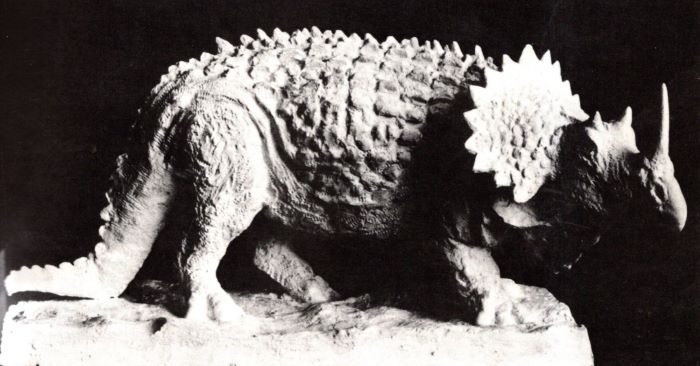
Geologist/artist/author Allen A. Debus sculpted this sculpture of the way the putative horned dinosaur Agathaumas sylvestris was believed to have looked back in the late 19th Century, based upon a vintage and quite fanciful sculpture and subsequent painting — both incorporating remains pertaining to other dinosaurian taxa — by artist Charles R. Knight housed in the collections of the American Museum of Natural History. Actually, “Agathaumas” was a “headless wonder” based on very incomplete fossil postcranial skeletal material, also housed in the American Museum, probably pertaining to the well-known ceratopsian dinosaur Triceratops.

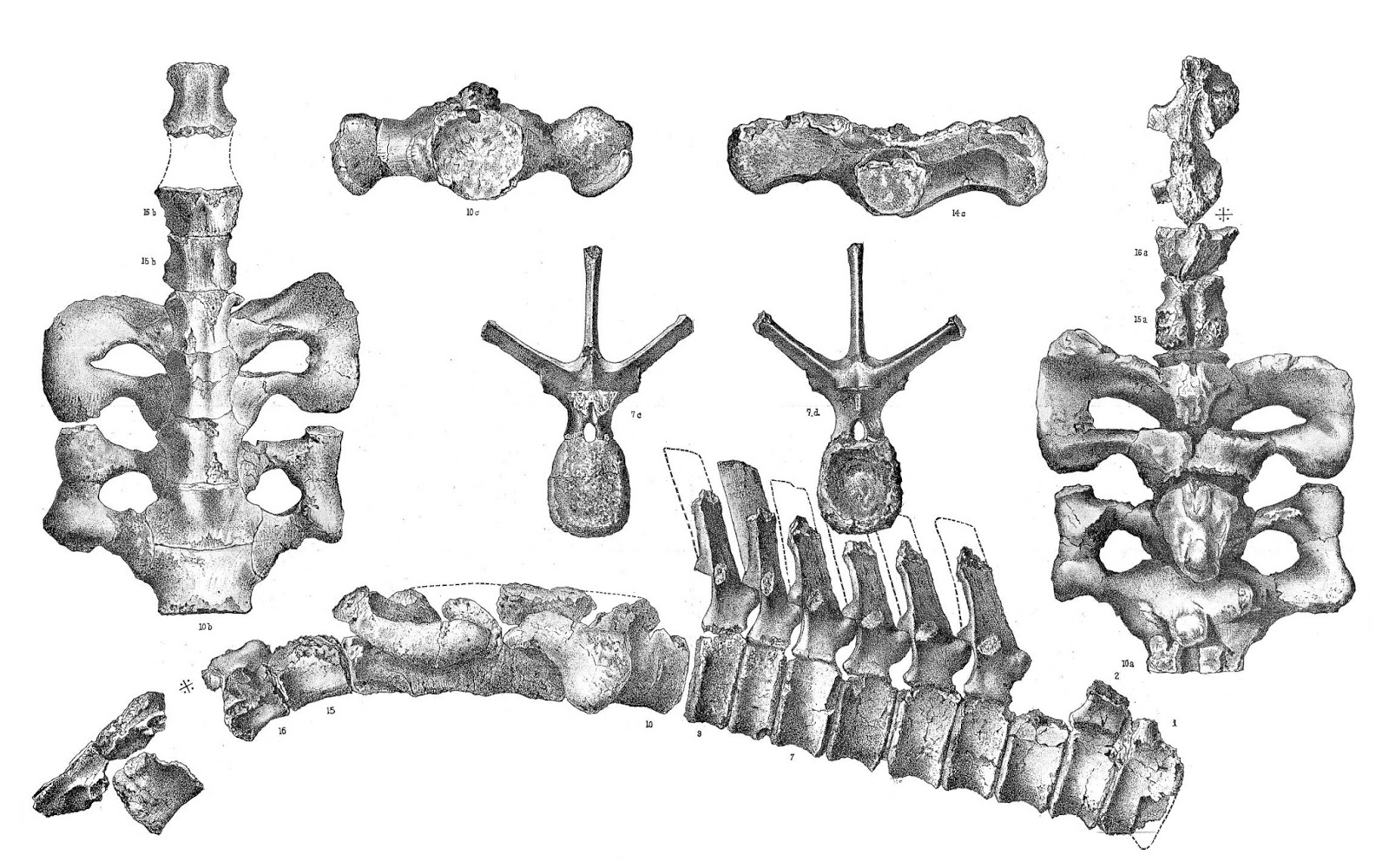
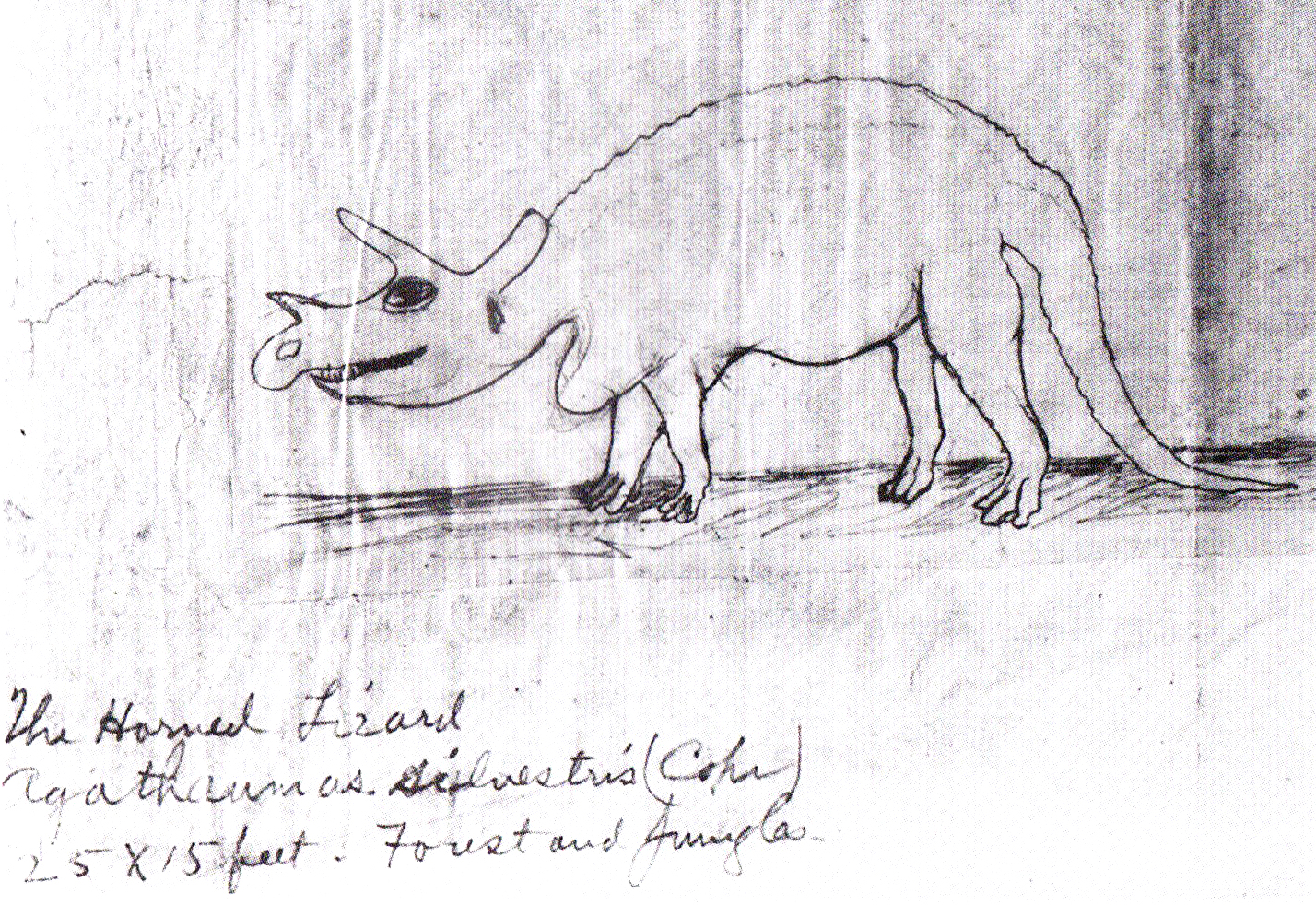
The type specimen of “Agathaumas sylvestris” (below, left) as illustrated by Edward Drinker Cope in a scientific paper published in 1872; and Cope’s own 1890 sketch (below, right) of what he thought “Agathaumas” might look like in life, based on the more completely known Triceratops.
Knight’s original sculpture and subsequent painting (below, left and right, respectively) of “Agathaumas,” done in 1895 under the direction of Cope (sculpture photo reproduced in the book Dinosaurs, Mammoths and Cavemen: The Art of Charles R. Knight, co-authored by myself and Sylvia Massey Czerkas). Knight’s “Agathaumas” painting, first published in black and white in an 1897 issue of The Century Magazine (which I own), reproduced in this color “jigsaw puzzle” souvenir postcard (below right) from the American Museum of Natural History, manufactured by Whitehall Games, Inc., of Newton, MA.

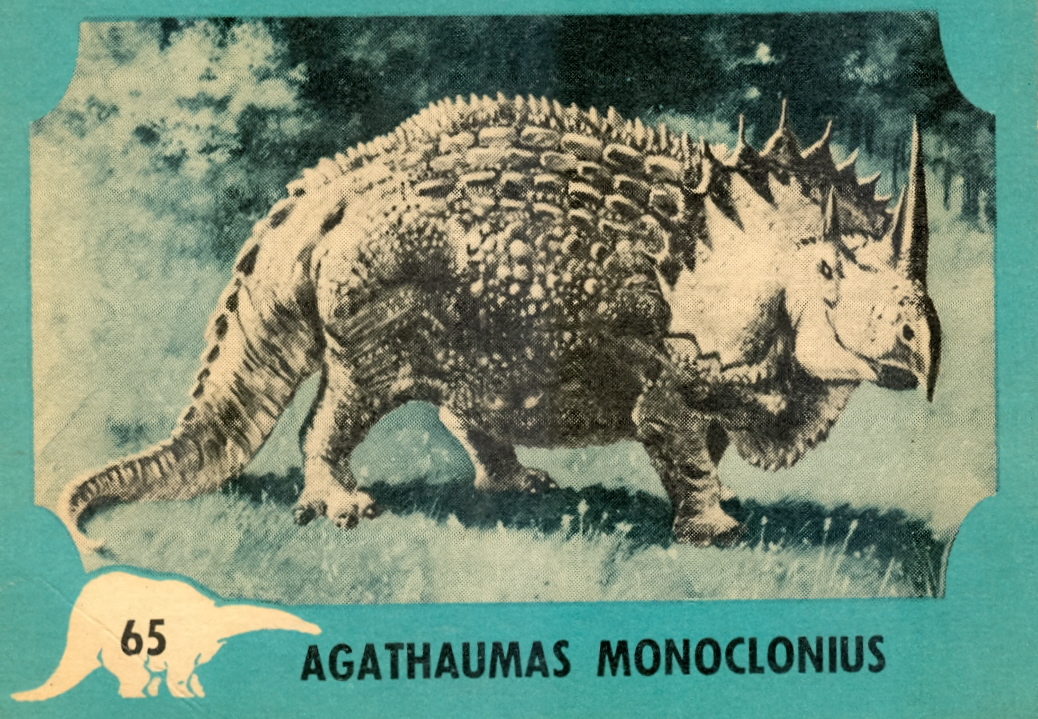
Left, a “Dinosaur Series” trading card from Nu-Cards (1961). The added name Monoclonius happened to be on the file copy of the photo in the library of the American Museum of Natural History.
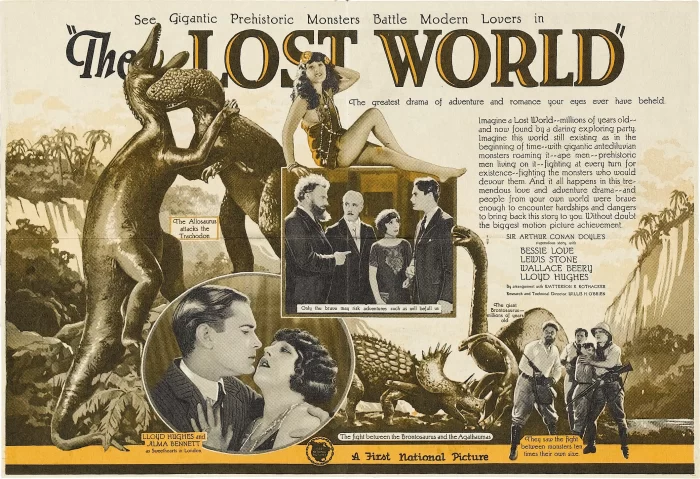
Although mostly a chimera, “Agathaumas” turned up in several early motion pictures. Below left, an advertisement for the silent motion picture The Lost World (1925) including the “Agathaumas” stop-motion model sculpted by Marcel Delgado and animated by Willis O’Brien, reproduced in th
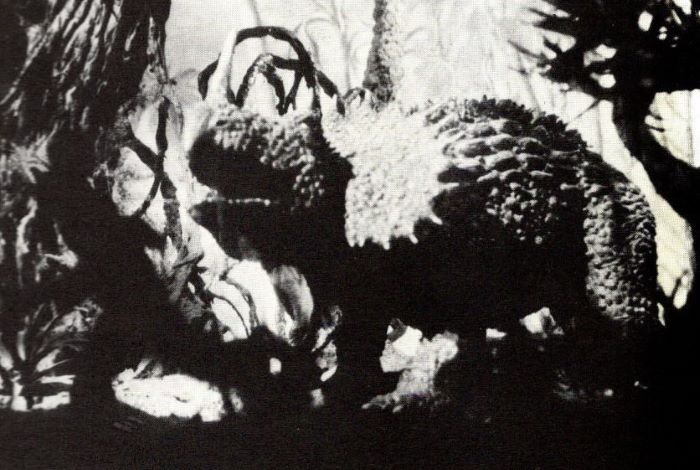
Below, in a photo from my collection, Willis O’Brien animates an “Agathaumas” for the unfinished RKO movie project Creation (1932).

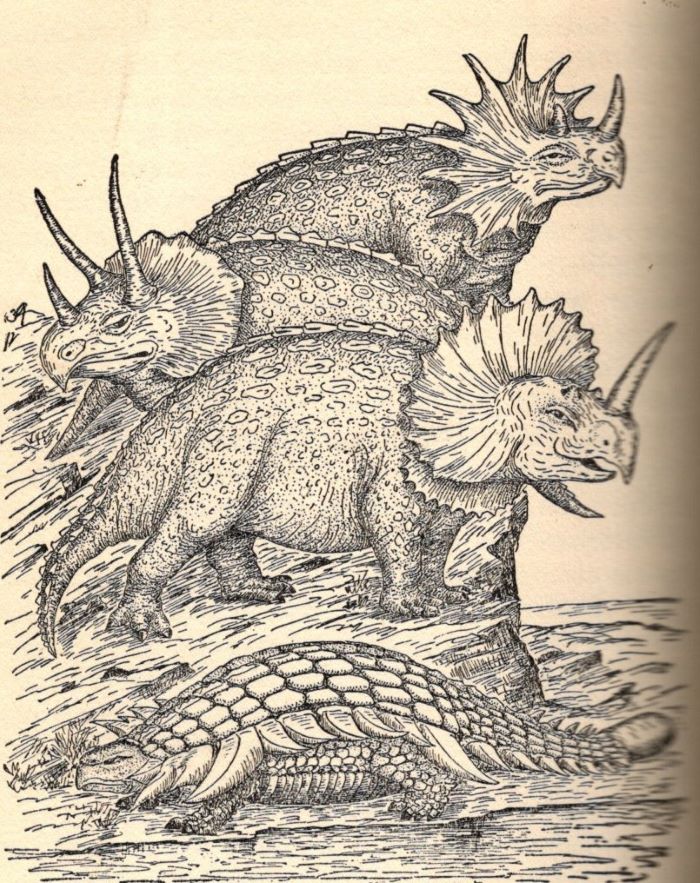
Ray Harryhausen’s “Agathaumas” (below, left) for his never completed stop-motion animation film Evolution (1938-40),photo published in his Film Fantasy Scrapbook (1972) ; and “Agathaumas” (below, right) appearing with other dinosaurians in the book Strange Prehistoric Animals and Their Stories (1948), one of the rarer books on the subject in my collection, written and illustrated by A. Hyatt Verrill.
Small pewter Agathaumas figure, one of a set of such miniature prehistoric animals from Ral Partha (1980s).

A rubber ceratopsian dinosaur seemingly modeled in part after Knight’s Agathaumas painting and sculpture, from Creatoloy in Irving, Texas, but made in China.

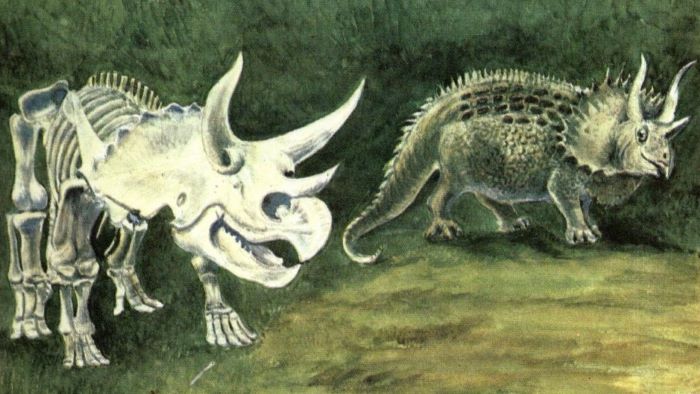
Geologist/clergyman Arthur Lakes’ watercolor painting (below, left) including a Triceratops skeleton and his copy of the speculative Charles R. Knight “Agathaumas” painting, as published in Time-Life Books’ Life Before Man (1972)., another book on one of my shelves.